Our Portfolio.
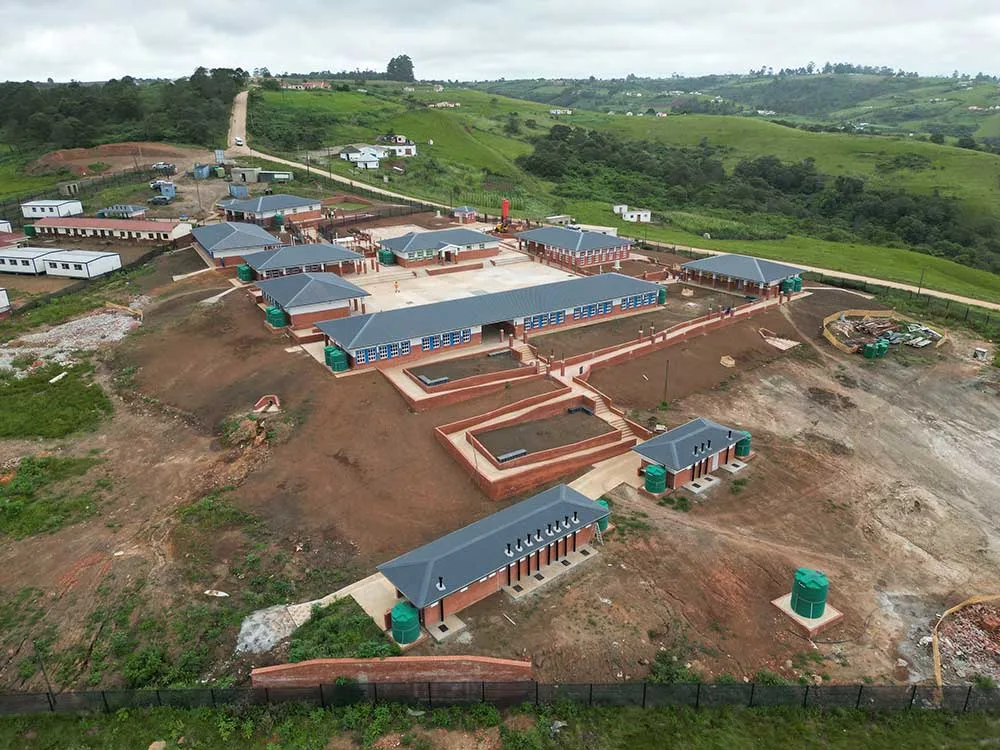
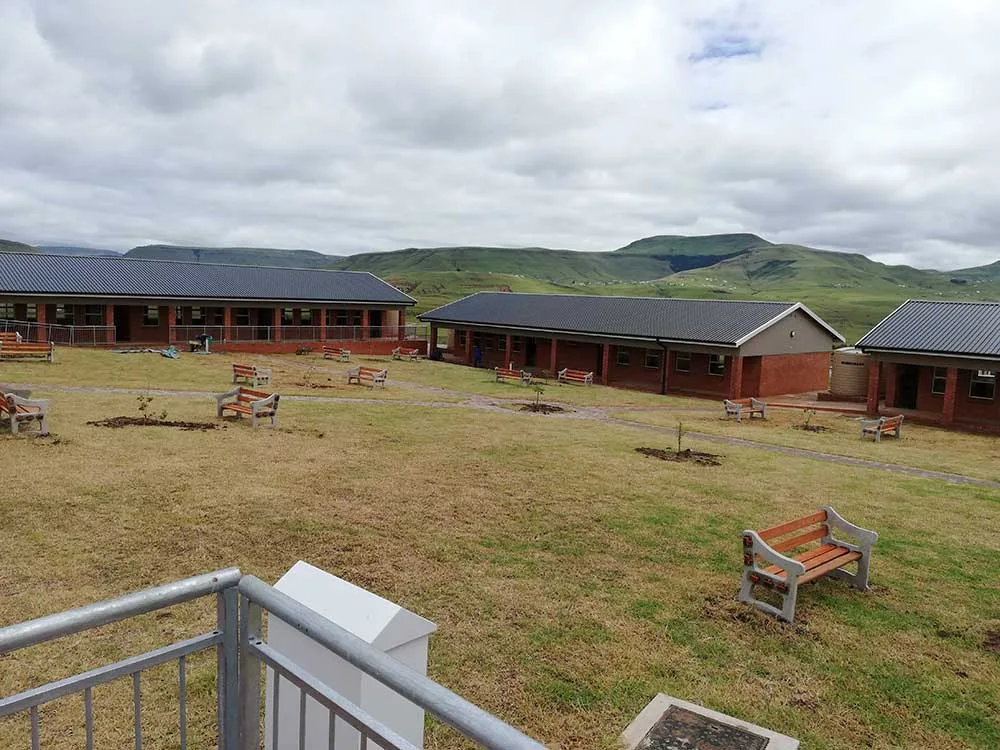
We have completed more than 600 projects in the built environment with a total value in excess of R3bn since 2001.
EAST LONDON
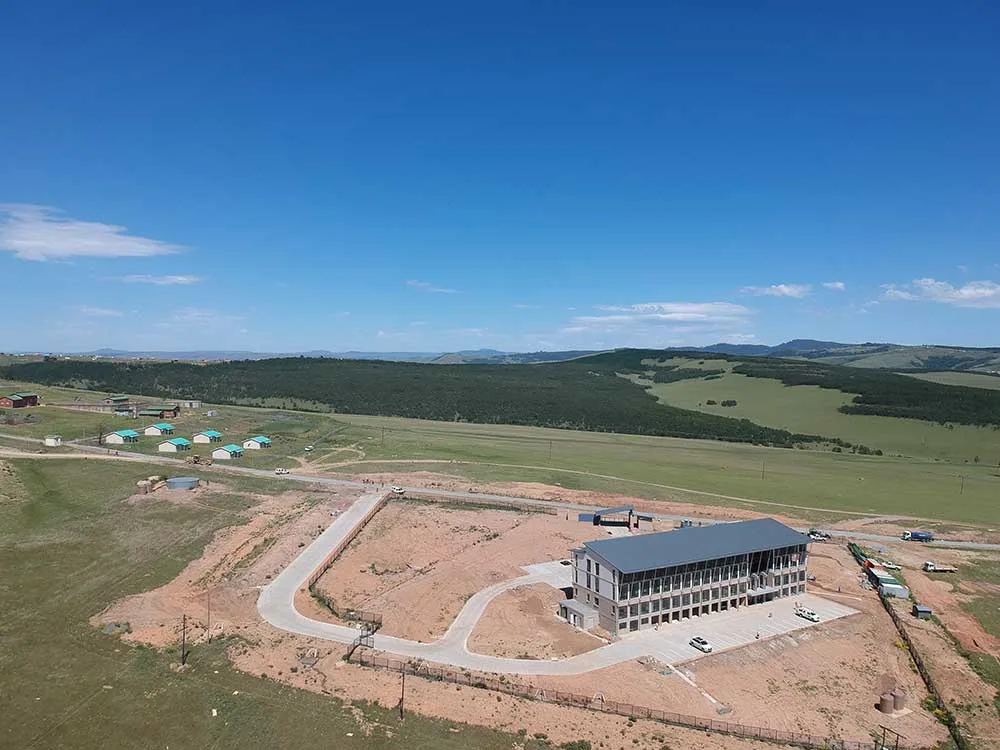
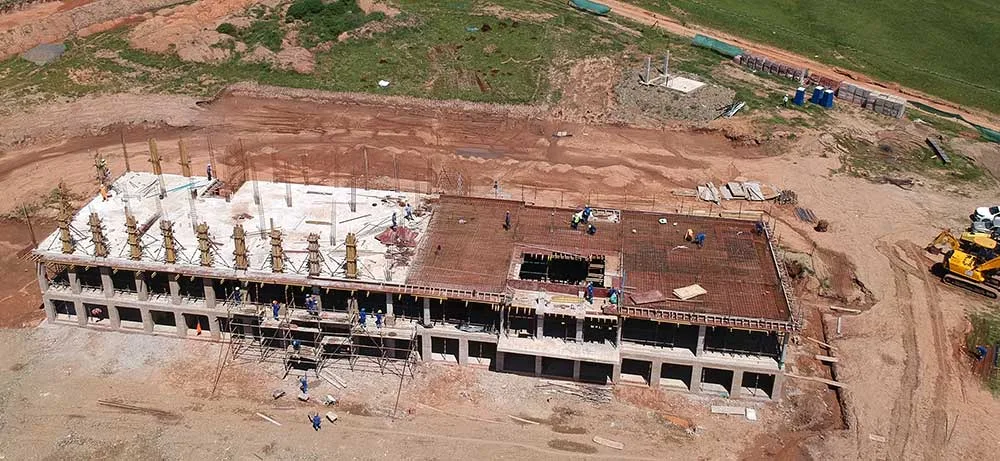
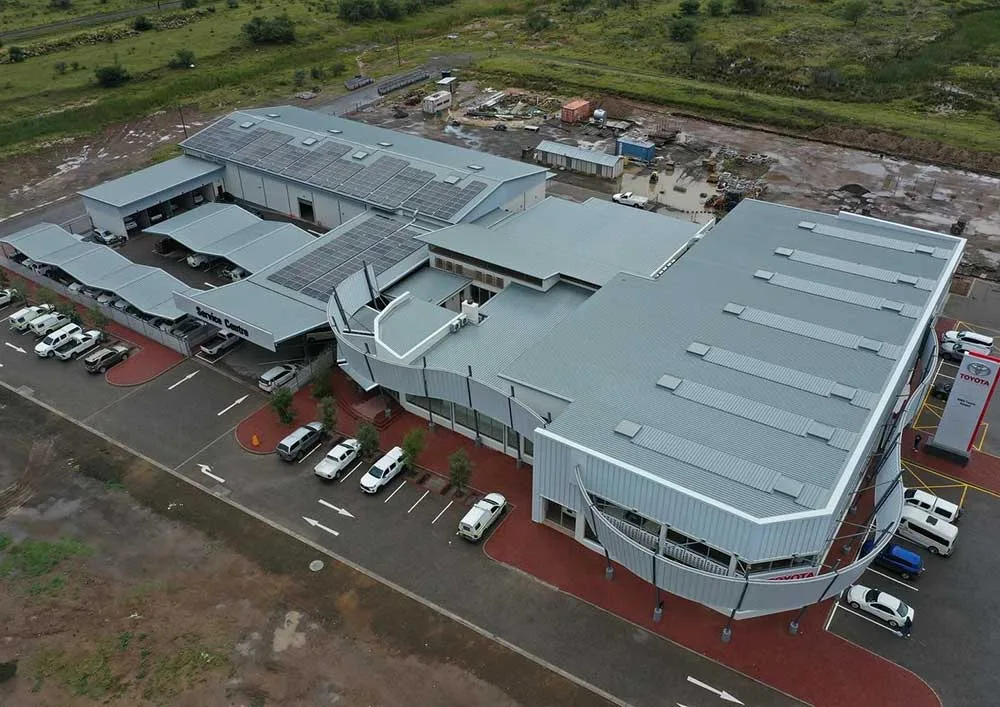
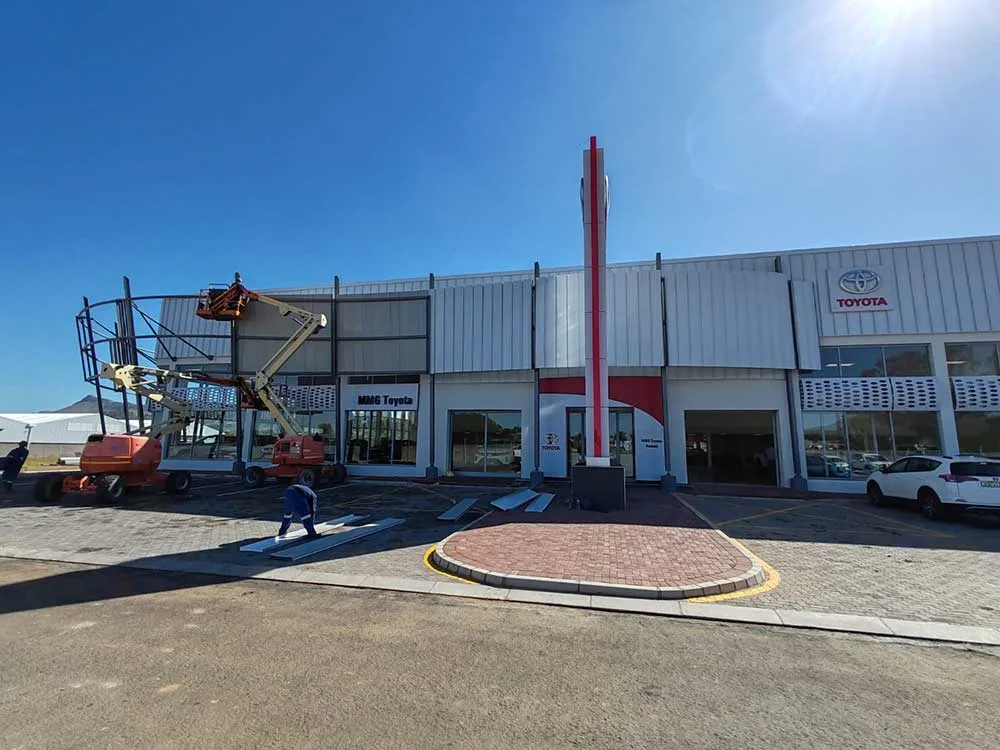
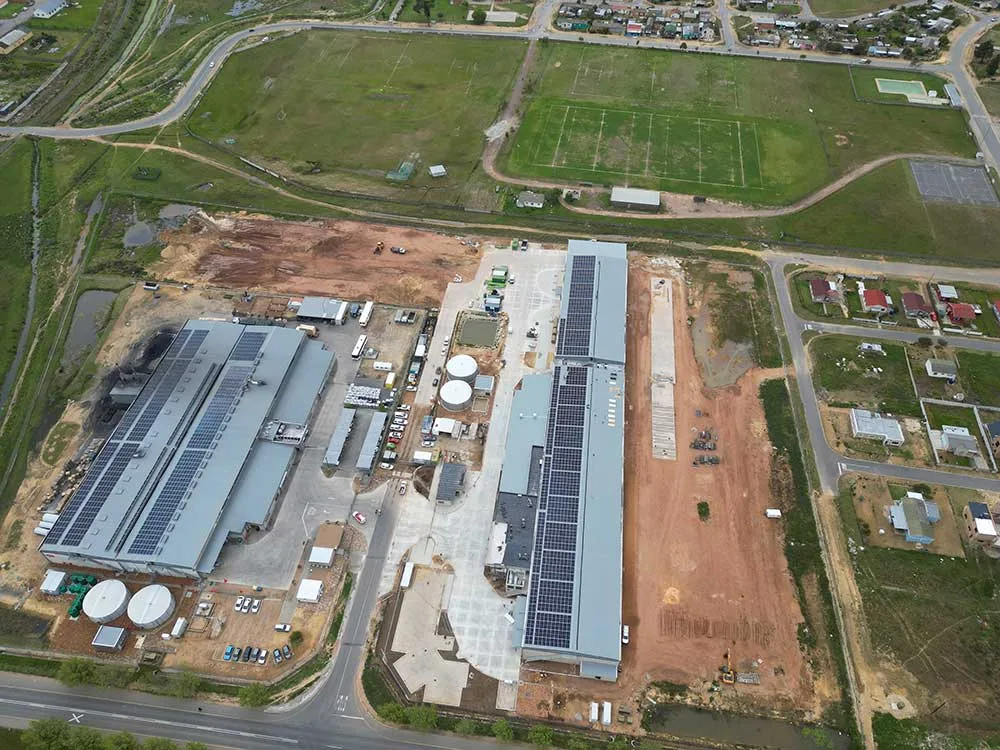
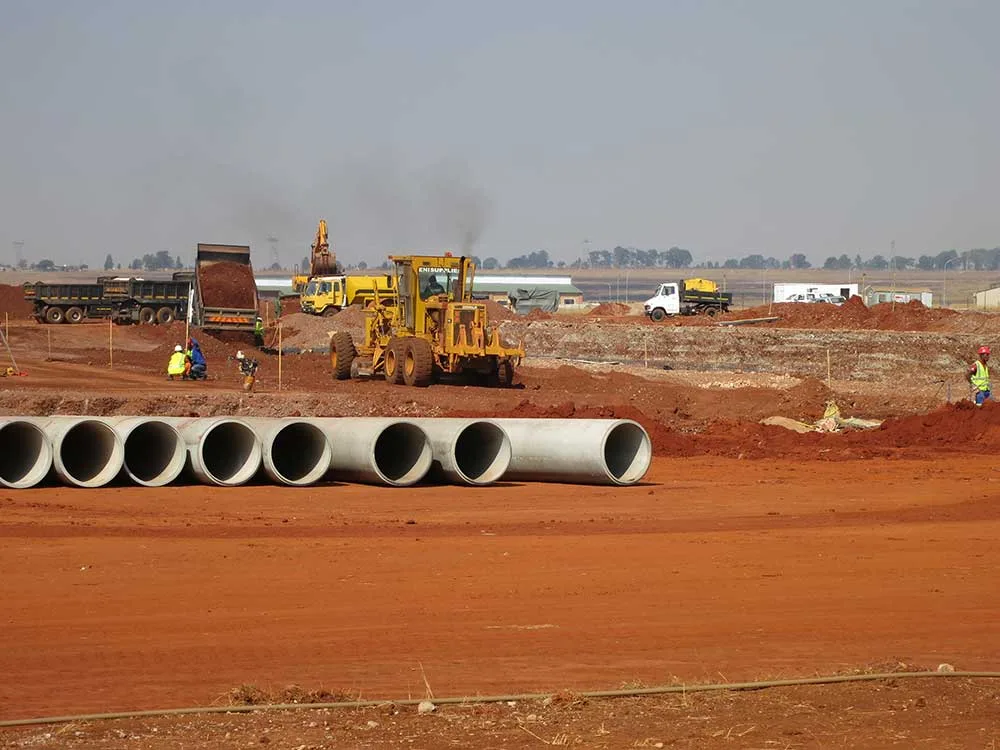
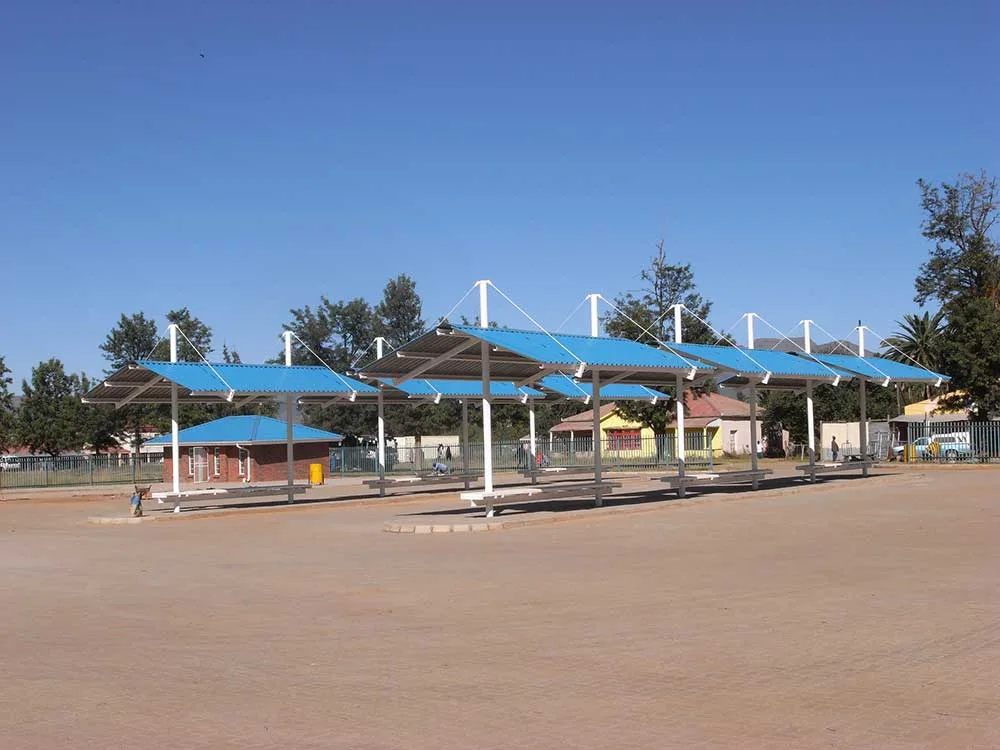
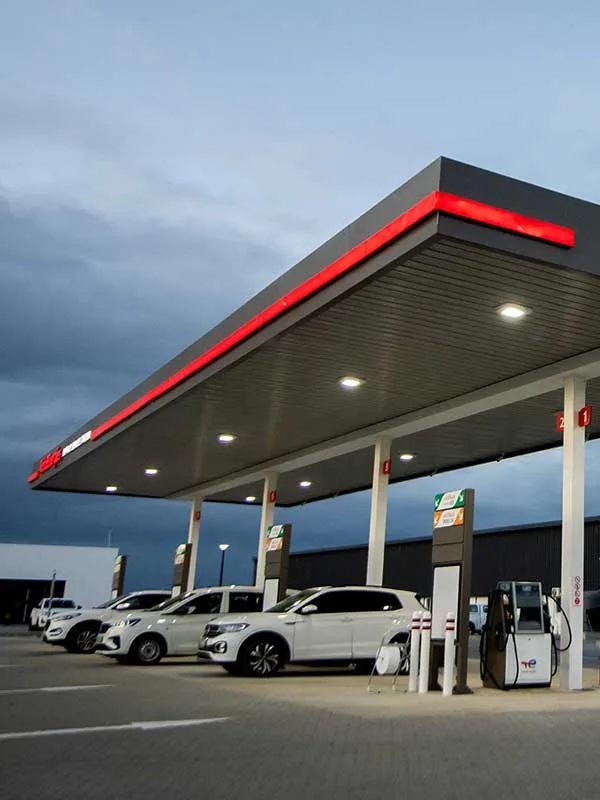
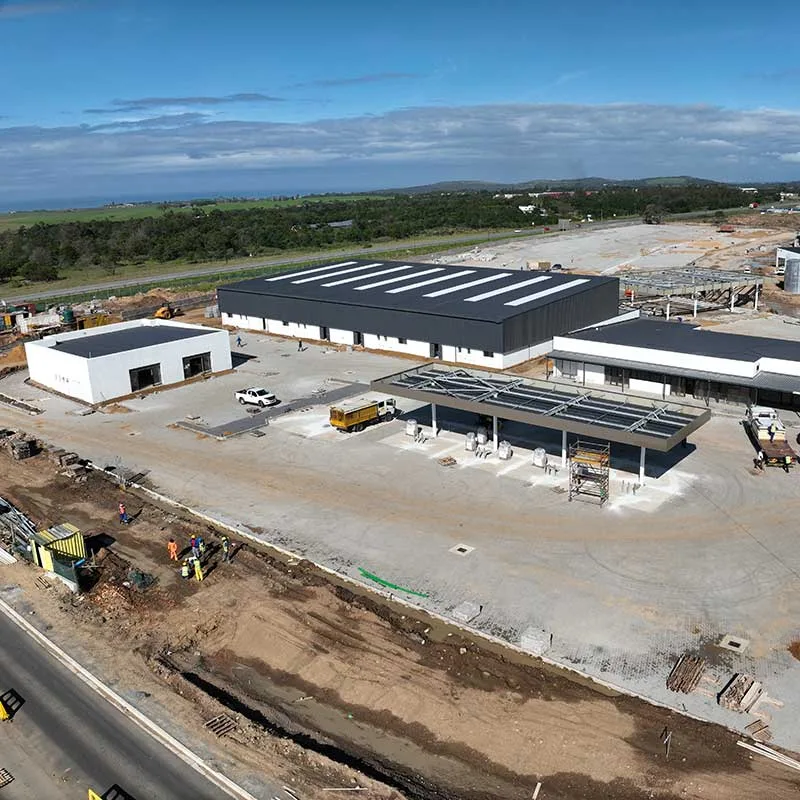
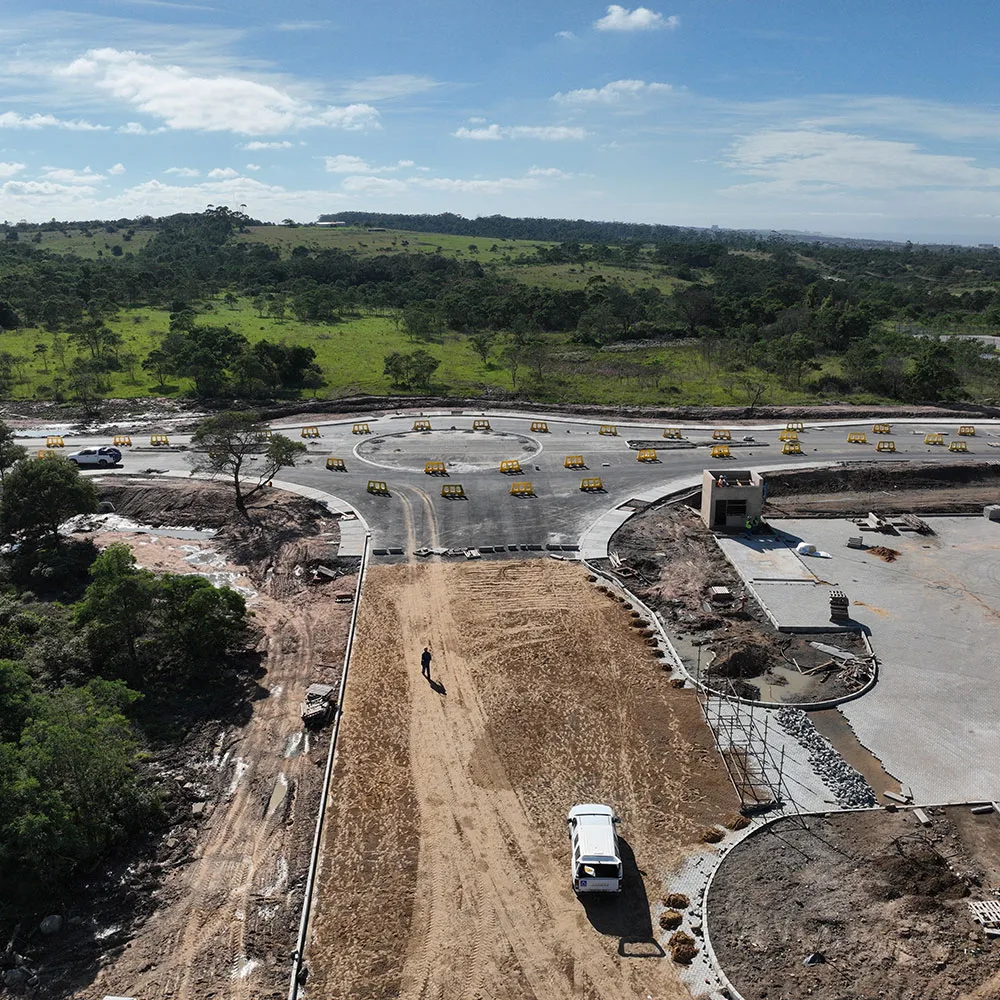
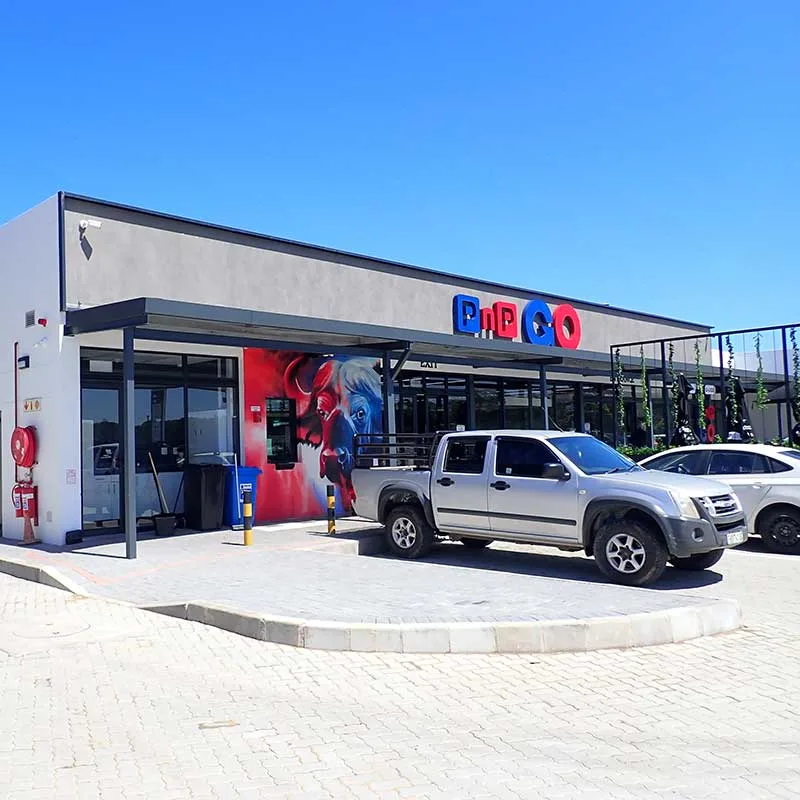
Buffalo Truck Stop.
Function: Project Managers and Civil Structural Engineers
Planning to Completion: July 2019 to August 2024
Construction Cost: R140 million
Location: Latitude -33.052433° , Longitude 27.806695°
Scope: Construction of a truck-stop on 6 hectares with 43000m2 of hardstand for truck parking, two filling stations, retail space, overnight accommodation, workshops, on-site water purification, sewage treatment, solar system and backup power, all protected by an extensive security system.
Key Facts:
- Buffalo Truck Stop is a unique project in the sense that it is “off-the-grid” in terms of municipal services.
- The greatest hurdle was the myriads of intertwined approval and licensing processes through several authorities and departments that had to be completed to bring the project to fruition. This was successfully managed with the expertise within the professional team.
- An innovative pavement layer design was developed to make best use of materials available on site. Several in-situ loading tests were done to investigate alternatives to determine the most cost-effective design. Life cycle costs of various pavement designs were compared, and interlocking block pavers on a stabilised base course proved the most economical.
- The co-ordination of services among the various disciplines required diligent attention due to the spread-out nature of the site and the wide range of services. There are more than 10km of underground ducts for at least 10 different service types installed. Because the requirements of all tenants and installations were not known when construction commenced, some forward thinking was required to make provision for unknowns.
Menlyn
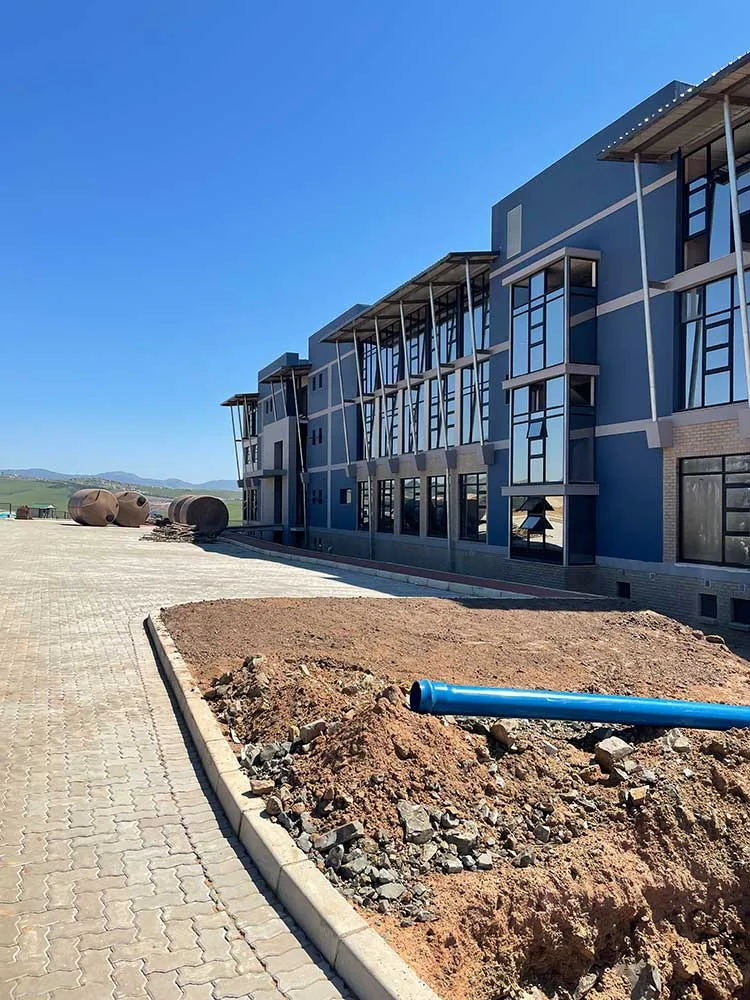
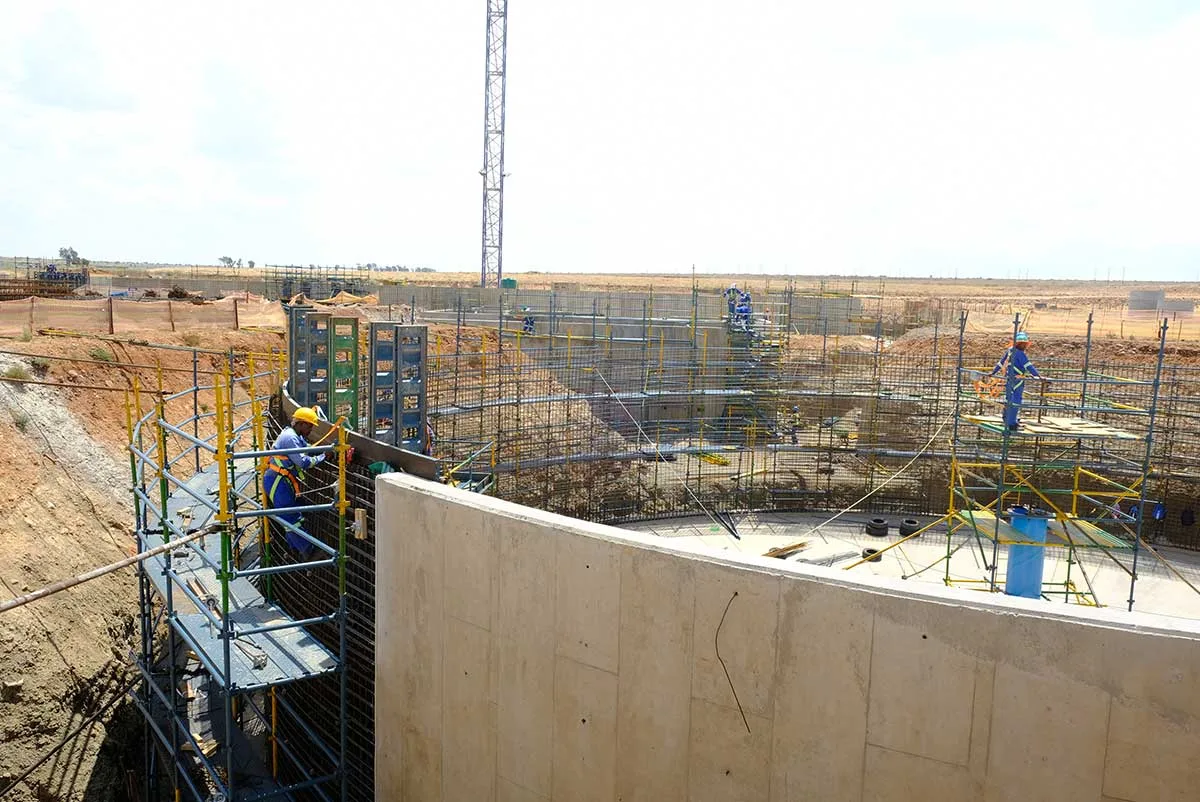
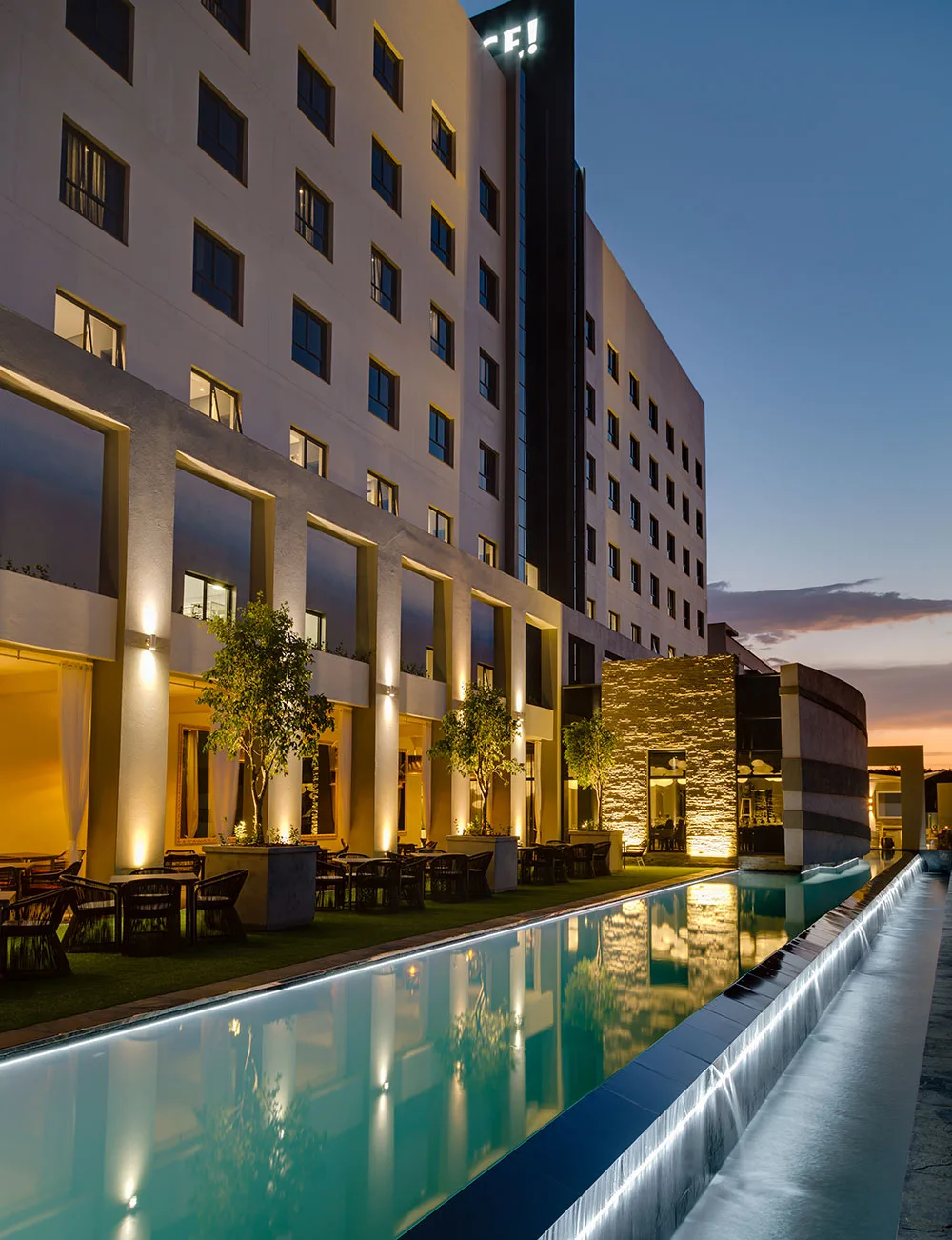
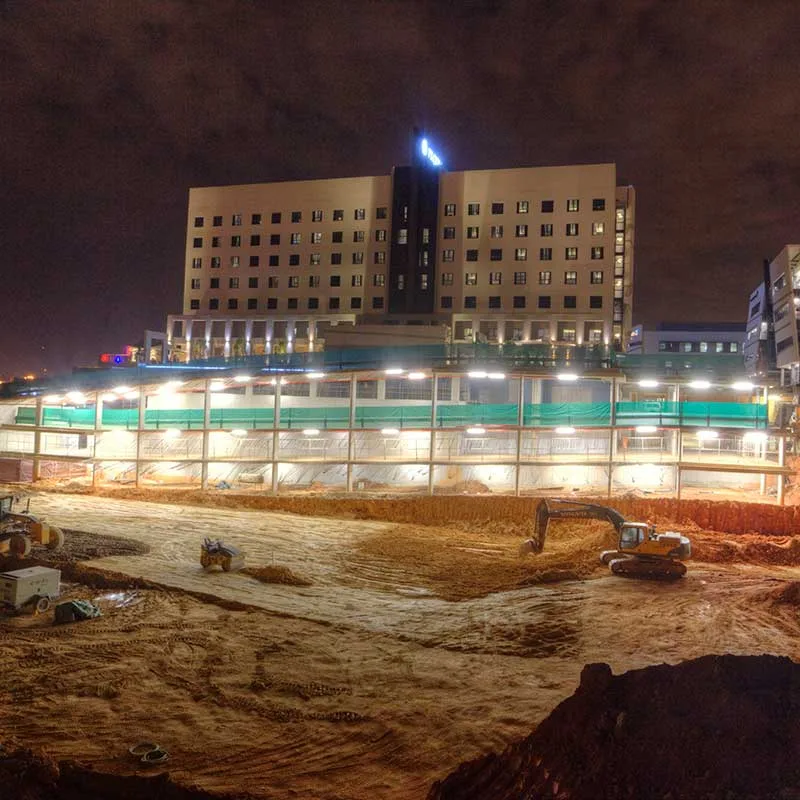
Fire and Ice Protea Hotel by Marriott.
Function: Civil and Structural Engineers
Planning to Completion: 2011 to 2015
Construction Cost: R200million
Location: Latitude - 28.271598°, Longitude 25.786356°
Scope:200 bed luxury hotel with 800person conference facility, and 2 levels of underground parking.
Key Facts:
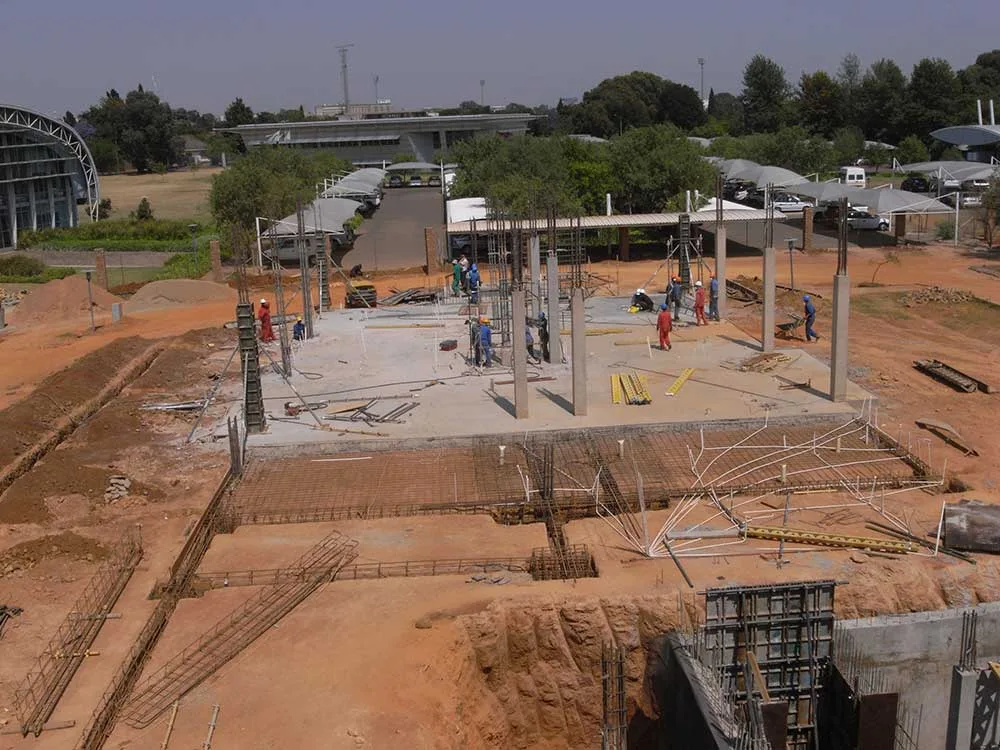
- The soil conditions were particularly challenging due to deep silty clayey soil with low bearing pressures interspersed with large obstructive boulders. The success of drilling of piles down to 11m deep at any given position was not always assured. It was decided that a flexible approach be followed where that piles were replaced by pile groups of smaller diameters and that pile positions and pile caps could be adjusted to suit the actual piles that were successfully drilled down to bedrock. Some breaking up of boulders in pile auger holes were also successfully undertaken. This approach realised significant cost saving in comparison to the conservative design approaches followed on adjacent projects.
- The parking decks and the high-rise tower block for the rooms was constructed of in-situ cast post-tensioned which is suitable for slabs with repetitive layouts. The challenge of hotel accommodation on parking space is the mismatch between the structural grid spacing of columns. This was dealt with by an in-situ cast concrete transfer slab which also accommodated ramps, level differences, the swimming pool, stormwater drainage and sewers.
Eastern Cape
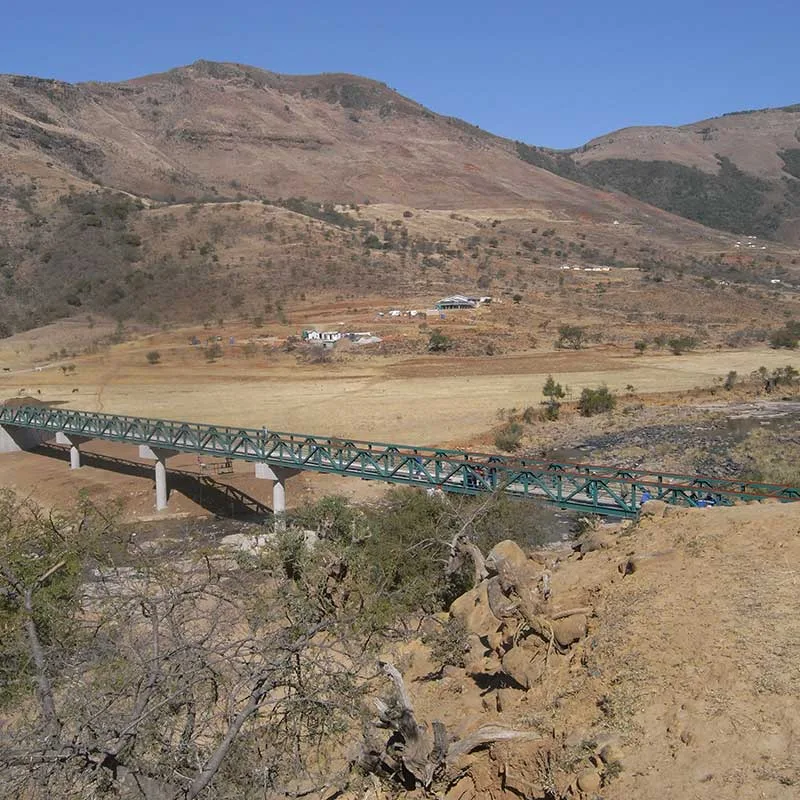
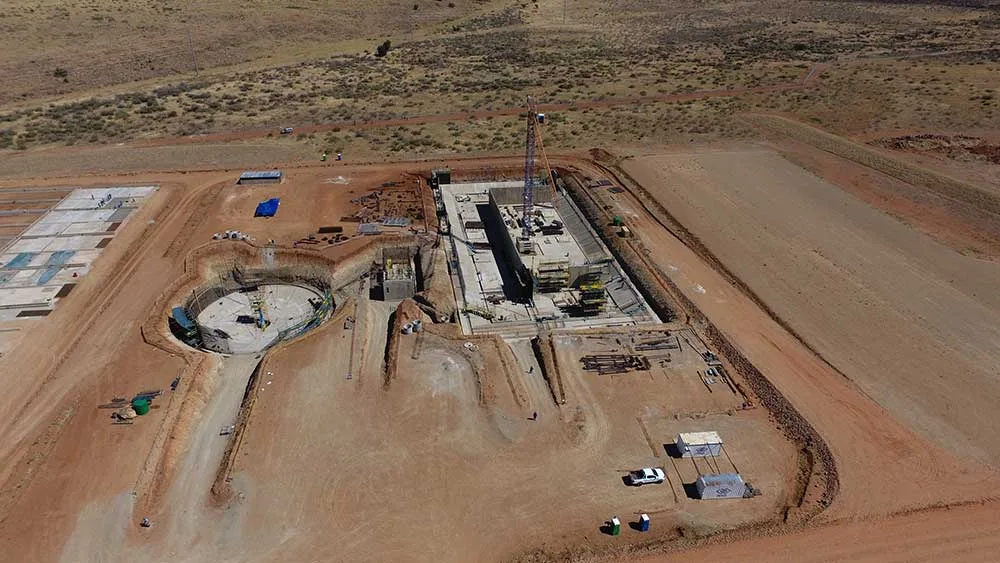
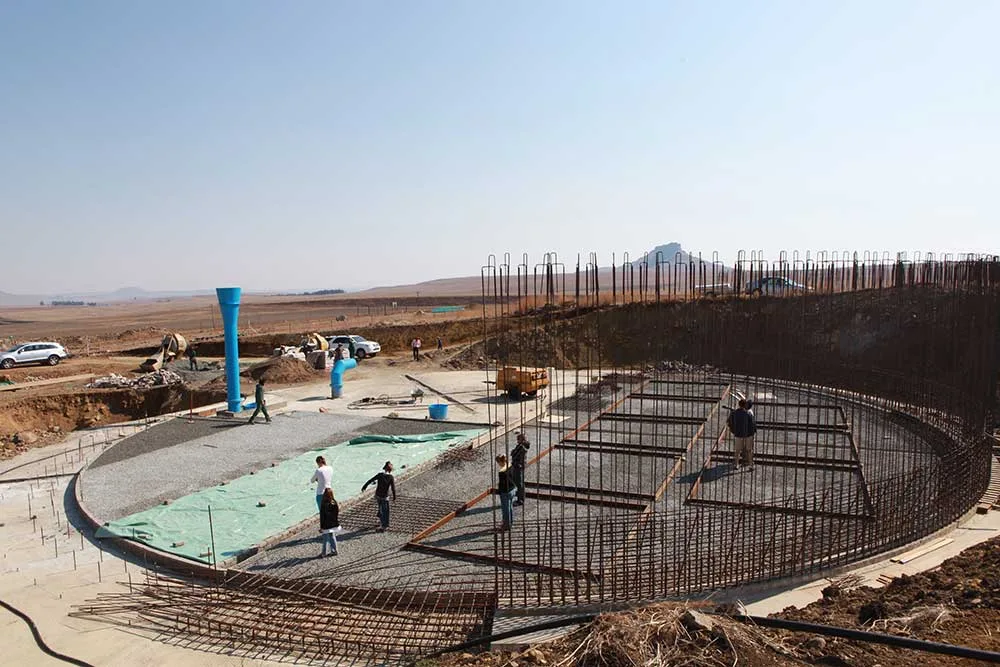
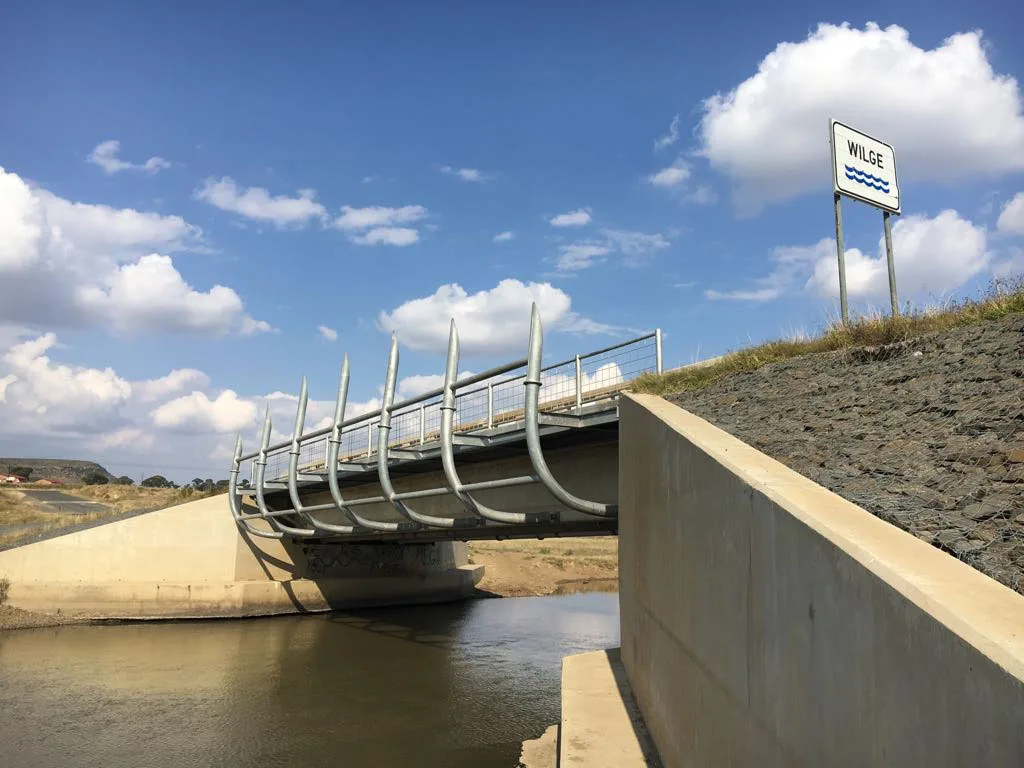
Silindini Bridge, Xuka River.
Function: Project Manager and Structural Engineers
Planning to Completion: 2008 to 2011
Construction Cost: R8million
Location: Latitude -31.579699°, Longitude 27.957132°
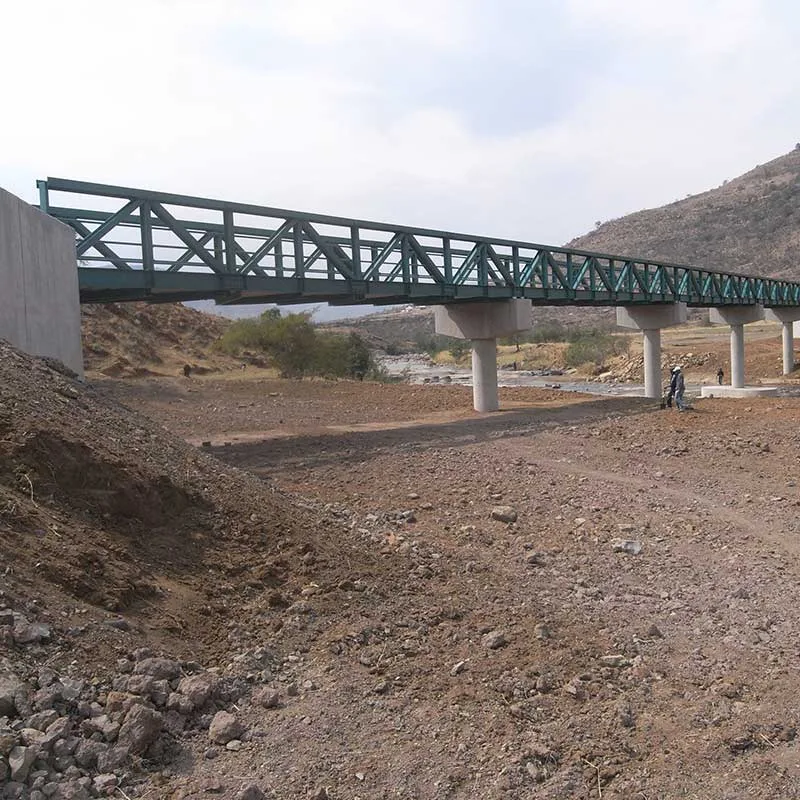
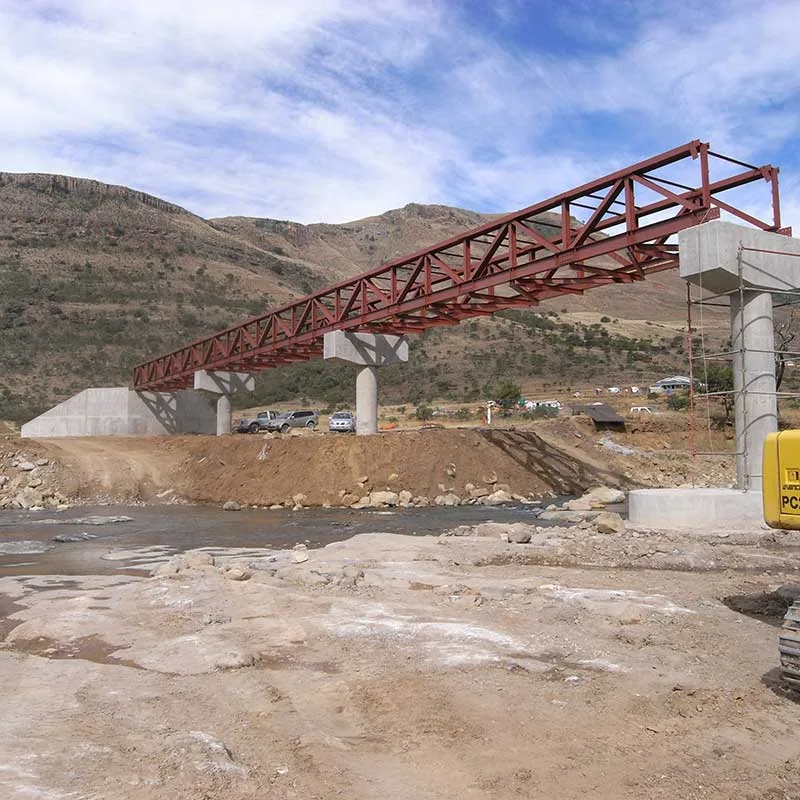
Scope: The bridge is 120m long, with six spans of 20m each, supported on concrete columns. The deck consists of bolted structural steel girders with a cast in-situ deck on permanent formwork.
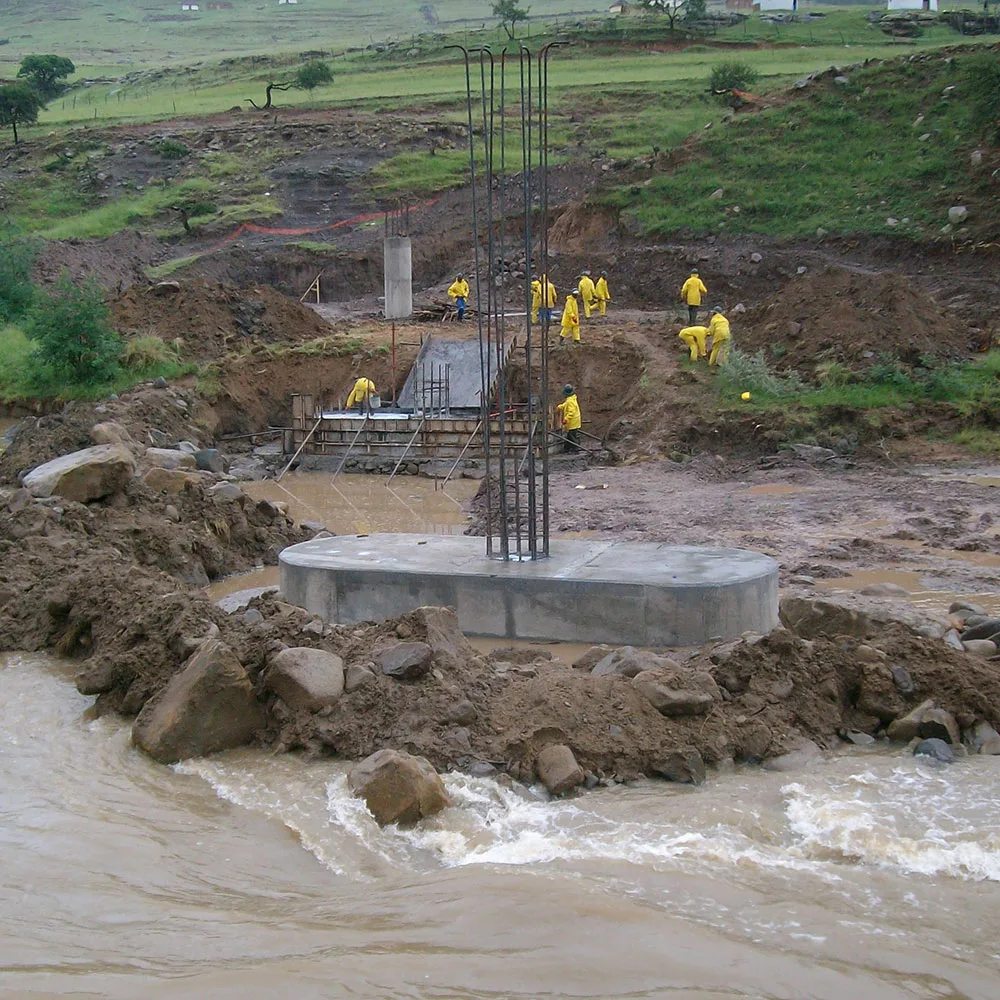
The bases are 7.0 x 3.0 x 0.8m, embedded deep into the riverbed soil profile, which consists of a deep alluvial boulders and sand.
Key Facts:
- The project was funded by Lonmin and initially intended as a foot bridge for pedestrians to the remote village across the river. This was motivated by the drowning of school children on their way to and from school. However, during community interactions, the need for the bridge to accommodate livestock and carts was also expressed. Given that access could not be regulated, it was decided to design the bridge for traffic loadings. The funder agreed to the extension of the scope of the project.
- Available funds were limited, so various bridge configurations were investigated, including proprietary prefabricated steel bridges and precast concrete beams, which proved to be more expensive. The crossing position was chosen at the point of lowest flood velocities to avoid expensive piled foundations down to bedrock. The lower stream velocities made it possible to use massive embedded concrete bases, due to reduced scouring actions in the riverbed.
- The structural steel trusses were designed to be cantilevered without support between spans, reducing the need for cranes to lift large bridge components. This allowed the structure to be assembled in-situ in small components, eliminating the use of cranes. The concrete deck was designed to be cast incrementally, without the use of propping on the riverbed, which is prone to flooding